
Q
What Are the Practical Social Skills Activities You Can Try at Home?
Practical social skills activities at home include mealtime conversations, greetings, and turn-taking during chores or games. Visual supports and role-play reinforce skills, while fun ABA-based activities like building projects or storytelling chains build cooperation. Consistent parent involvement strengthens learning and generalization across settings.
A
Parents often ask how they can support social development at home. Therapy sessions may only take place a few times a week, but children need daily practice to strengthen skills like sharing, conversation, and empathy. The home environment is a natural classroom where social learning can happen through play, chores, and family routines.
This guide explores practical social skills activities you can try at home, offering clear examples, strategies, and tips so you can confidently support your child’s growth.
Why Social Skills Practice at Home Matters
Children on the spectrum or with social challenges often struggle to generalize what they learn in structured settings. A skill practiced in therapy may not automatically carry over into daily life. Parents can bridge this gap by reinforcing lessons through everyday interactions.
Research shows that when children’s social communication skills practiced at home generalize to school and vice versa, they demonstrate stronger peer interactions and better social engagement in different environments.
A recent longitudinal trial found that improvements at home carried over into school and unfamiliar settings over time, highlighting the value of consistent practice across contexts
Social Skills Activities in Daily Routines
Mealtime Conversations
Family meals are a powerful way to practice communication. Encourage your child to:
- ⬩ Ask politely for items.
- ⬩ Answer simple questions about their day.
- ⬩ Compliment family members or share gratitude.
This setting offers a safe, predictable opportunity to build back-and-forth conversation skills.
Morning and Bedtime Rituals
Use morning greetings and bedtime goodnights to practice polite exchanges. Adding simple scripts like “Good morning, did you sleep well?” helps establish habits for daily interaction. For children with autism, an autism morning routine visual chart can reinforce these steps consistently.
Household Chores as Social Practice
Chores like cooking, cleaning, or organizing toys can be done together. These tasks teach cooperation, patience, and communication. For example, while setting the table, children can practice offering items or waiting for directions.
 Games for Social Skills Development
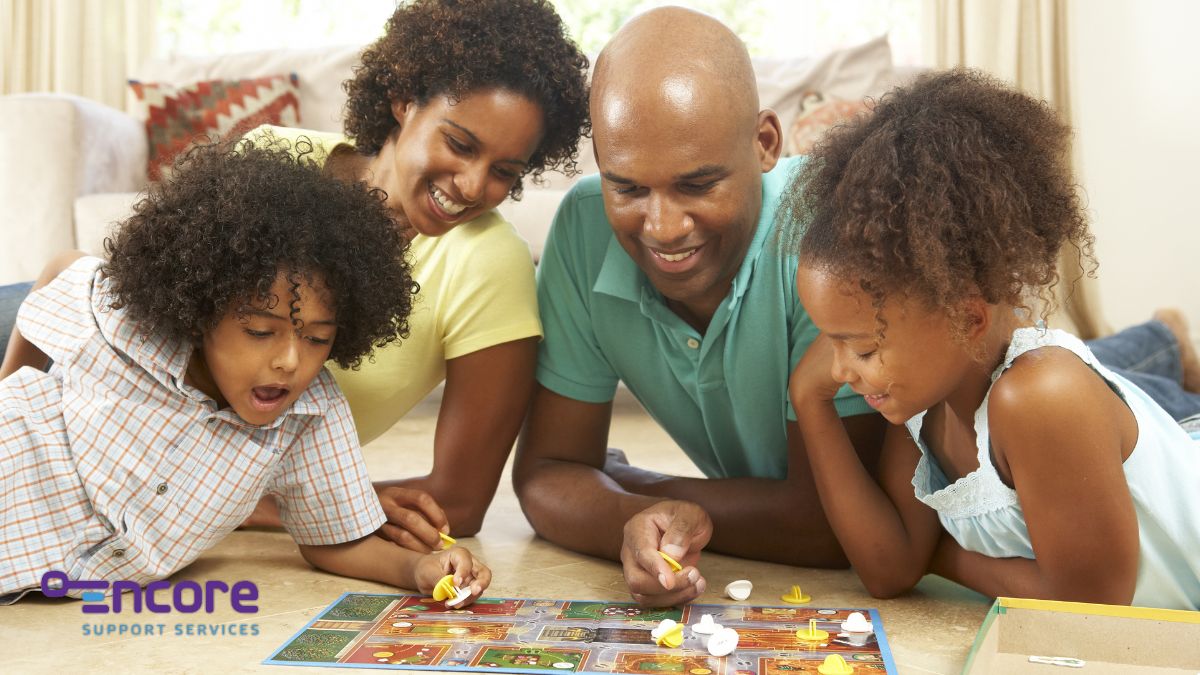
Games are highly effective because they blend fun with learning.
- ⬩ Board Games: Classics like Sorry! or Candy Land reinforce turn-taking.
- ⬩ Simon Says: Improves listening and following directions.
- ⬩ Charades or Pictionary: Builds nonverbal communication and helps children interpret gestures.
- ⬩ Role-Playing Scenarios: Act out situations like introducing yourself to a new friend or ordering food at a restaurant.
Structured play activities, such as role-playing, social stories, and cooperative games, have been shown to enhance emotion recognition and improve cooperative behavior in children with autism.
Activities to Teach Social Skills in Real-Life Situations
Practicing Greetings
Set up simple greeting practice with family members. Have your child say “hello” with eye contact, then gradually introduce greetings with neighbors or peers.
Sharing and Turn-Taking
Use toys, art supplies, or snacks to practice waiting and sharing. Praise each successful turn to reinforce the behavior.
Teaching Conversations
Start with short prompts: “What’s your favorite toy?” or “Do you want to play outside?” Over time, build up to multi-step conversations.
Solving Conflicts Together
When disputes arise, like wanting the same toy, guide children to brainstorm solutions. Ask, “What can we do so everyone is happy?” This teaches compromise and empathy.
Autism Social Skills Activities with Visual Supports
Visual aids help children understand expectations. Examples include:
- ⬩ A picture card showing a child raising their hand
- ⬩ Icons for “wait,” “share,” or “listen.
- ⬩ A daily chart listing steps in social interactions
In ABA in home therapy, therapists often use an autistic child visual schedule to teach skills. Parents can extend this by displaying cards around the house to remind children of social rules.
Fun ABA Activities to Reinforce Skills
ABA therapists often design activities that can be continued at home. Parents can try:
- ⬩ Building Together: Use Legos or blocks, requiring children to ask for pieces and cooperate on the design.
- ⬩ Cooking Projects: Baking cookies or making sandwiches teaches sequencing, cooperation, and sharing tasks.
- ⬩ Storytelling Chains: Each family member adds one line to a story, promoting creativity and listening.
These fun ABA activities combine structure with play, making practice enjoyable rather than forced.
How to Teach Kids Social Skills Step by Step
Breaking down skills into manageable parts makes them easier to learn:
- ⬩ Model the Skill: Demonstrate what it looks like (e.g., waving hello).
- ⬩ Practice Together: Role-play in a safe, low-pressure environment.
- ⬩ Reinforce Success: Praise attempts, not just perfect outcomes.
- ⬩ Generalize: Practice the same skill in new contexts, like at school or during playdates.
Teaching kids social skills works best when skills are revisited regularly and adapted as children grow.
 Why Parent Involvement Matters
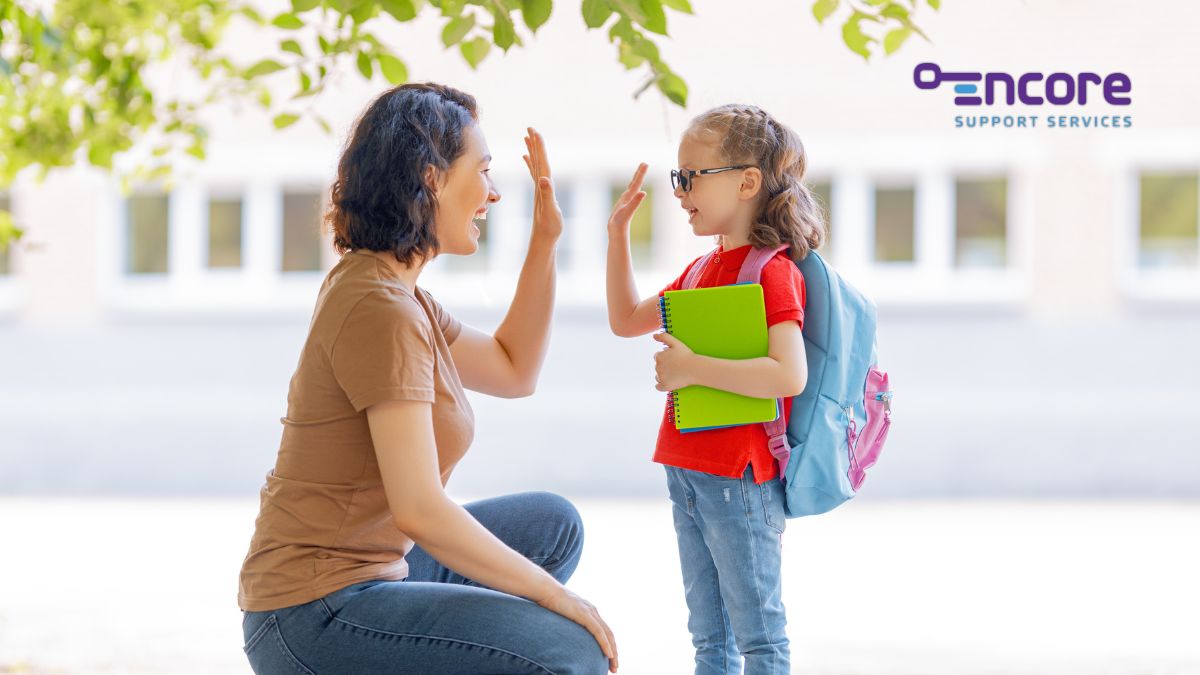
Parents are more than observers. They are active partners in teaching. A meta-analysis found that when parents led social skill-building activities, children showed meaningful improvements in communication, peer interactions, and behavior.
This shows that daily reinforcement by parents is just as critical as formal therapy sessions. The more consistent the practice, the stronger the results.
Frequently Asked Questions
What are social activities for people with autism?
Social activities for people with autism work best when tailored to interests and sensory needs. Options include tabletop role-playing games for connection, inclusive sports for teamwork, sensory-friendly museum and library programs for relaxed participation, and LEGO® clubs for structured play. Predictability and choice increase success.
What is the best social skills training?
The best social skills training depends on age and needs. Evidence supports PEERS® for teens, which boosts friendships in trials. For younger children, NDBIs build social communication through play. Peer-mediated programs teach classmates to support interaction. Effective training matches goals and learning style and tracks real-life progress.
How to teach autistic children social skills?
Teach autistic children social skills by embedding modeling, prompting, and reinforcement into daily play and routines. Use peer-mediated practice, visual supports, and AAC when needed. Combine AAC with NDBIs to boost language. Generalize skills across home, school, and community while tracking progress and respecting autonomy.
Strengthen Social Skills with Professional Support
While home practice is powerful, professional support ensures skills are taught systematically and progress is tracked. Engaging in autism therapy services in New York and New Jersey gives families access to structured ABA guidance and practical coaching.
Every child deserves the chance to build strong social skills that foster friendships and independence. At Encore ABA, therapy programs are designed to blend clinical strategies with real-life practice, giving parents the tools to continue learning at home.
If you’re ready to combine practical home practice with professional support, call us. Together, we can give your child the tools to connect, communicate, and thrive.
Recent Questions
- Will my child ever be perceived as “normal”?
- How do I deal with an intensely emotional child, while juggling daily dut...
- How can I foster the development of early reading skills in my young childr...
- How can I help my child make friends?
- How do I make my home environment a happy, safe place for my child?
Encore Services
Special Ed
●
Behavior Modification DIR/Floortime
●
Social Skills & Social Thinking
●
Speech-Language Therapies
●
Multi-Sensory Math & Reading Instruction
●
Brain Gym & Physio-neurotherapy
●
Hebrew Reading Skill (Kriah) Training
●
Hands-On Music Therapy
●
Neuropsychological, Nutritional & Behavioral Evaluations
Encore ABA
●
Behavior Modification DIR/Floortime
●
Social Skills & Social Thinkin
g●
Speech-Language Therapies
●
Multi-Sensory Math & Reading Instruction
●
Brain Gym & Physio-neurotherapy
●
Hebrew Reading Skill (Kriah) Training
●
Hands-On Music Therapy
●
Neuropsychological, Nutritional & Behavioral Evaluations
