
Q
How Do You Support Your Child in Making and Maintaining Friendships?
Support your child in making and maintaining friendships by creating practice opportunities at home, school, and in the community. Use playdates, role-play, scripts, and social stories to build skills. Encourage shared-interest clubs, small group activities, and cooperative play. Collaboration with teachers and therapists strengthens long-term outcomes.
A
Friendships play an important role in a child’s happiness and development. Many parents worry when their child struggles to connect with peers, whether at school, in playgroups, or during community events. For autistic children, these struggles can feel even harder. The good news is that children can learn social skills, and parents can create supportive environments that make friendships possible and sustainable.
Below, we explore practical strategies, evidence-based insights, and simple ways you can help your child make and keep friends.
Why Friendships Are Important for Children
Friendships help children feel included, learn cooperation, and gain emotional support. Strong school friendship connections improve self-esteem and lower the risk of isolation. They also provide a natural setting for practicing empathy, sharing, and conflict resolution.
For children with autism, friendships may not form easily, but research shows that peer connections improve social competence and overall well-being. Support at home and school can make the difference between loneliness and meaningful relationships.
Friendships also prepare children for adult life. Kids who practice social skills early are better equipped for teamwork in future workplaces and more resilient in handling conflicts.
 Understanding Friendship Challenges in Autism
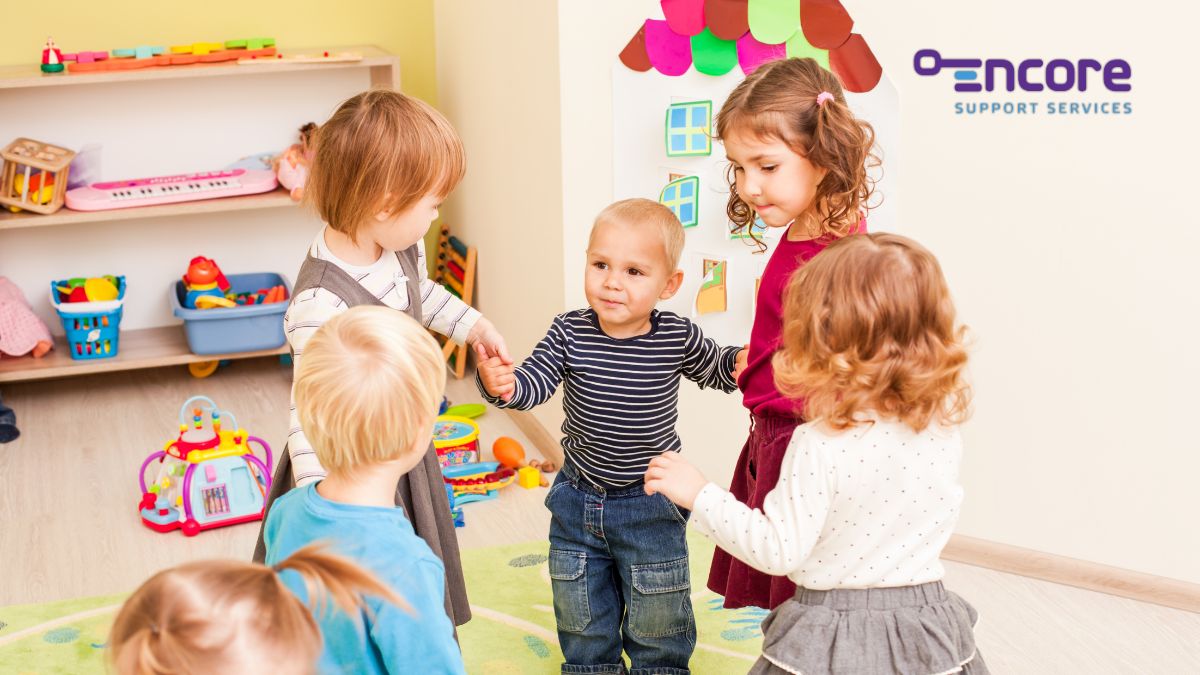
Autistic children may face obstacles such as difficulty reading social cues, managing conversations, or regulating emotions. Challenges vary depending on age and developmental level.
- ⬩ Preschool years: Children may play alongside peers but not join in cooperative games.
- ⬩ Elementary years: They may want friends but struggle with conversation flow or shared activities.
- ⬩ Adolescence: They may feel isolated when peers focus on humor, sarcasm, or dating.
Studies estimate that around 50% of autistic children struggle with peer relationships compared to their neurotypical peers. This does not mean friendships are out of reach. It means children need tailored support.
Encouraging School Friendship Opportunities
Children spend much of their social time at school, making it a natural setting for friendships. Parents can help by:
- ⬩ Talking with teachers about peer support programs
- ⬩ Encouraging structured group work that promotes inclusion
- ⬩ Setting up playdates with classmates outside of school
For children who need extra support, peer-mediated programs, where classmates are taught to include and prompt interactions, have been shown to improve social outcomes for autistic children.
Parents can also request friendship-related goals in an Individualized Education Program (IEP). For example, a goal might focus on joining group play at recess or starting one peer conversation daily.
How to Help an Autistic Child Make Friends
Parents often ask how to help autistic child make friends when natural interactions feel challenging. Here are some approaches:
- ⬩ Use naturalistic teaching: Embed social lessons into daily play and routines.
- ⬩ Practice scripts: Role-play greetings, turn-taking, or starting conversations.
- ⬩ Visual supports: Social stories or picture schedules clarify what to expect in interactions.
- ⬩ Model friendship behaviors: Children learn by watching parents show kindness, sharing, and cooperation.
Evidence suggests that children who practice social communication at both home and school make stronger improvements than those who practice in only one setting. A short-term intervention involving both parents and school personnel led to measurable gains in social communication that held at follow-up.
High-Functioning Autism and Friendships
Children with high-functioning autism may appear socially capable but still struggle with subtler skills. They may understand conversation but miss sarcasm, humor, or unwritten rules of peer groups. Parents can support by:
- ⬩ Coaching flexible thinking when plans change
- ⬩ Explaining hidden rules of social groups
- ⬩ Encouraging participation in shared-interest clubs, like robotics, art, or gaming
Practical Strategies for Autism and Friendships
Friendship building does not happen overnight. Support grows stronger when parents combine patience with practice.
- ⬩ Create small group playdates: Children learn better with 1–2 peers instead of large groups.
- ⬩ Encourage cooperative activities: Games like building blocks or simple board games require turn-taking.
- ⬩ Address sensory barriers: Choose quieter, familiar spaces for play to prevent overload.
- ⬩ Use special interests: Shared hobbies, like trains, animals, or music, can bridge the gap between children.
These approaches promote autism socializing in comfortable and rewarding ways.
Teaching Autism and Friendship Skills at Home
Friendship skills start with everyday practice. Parents can reinforce skills during meals, family activities, and sibling play.
- ⬩ Practice empathy: Ask, “How do you think your friend felt when that happened?”
- ⬩ Encourage emotional labeling: Pair feelings with visuals to make them easier to recognize.
- ⬩ Teach repair strategies: Guide children on how to apologize or rejoin play after conflict.
Parents can also use books and movies as teaching tools. Pausing during a scene to ask, “What do you think that character felt?” builds empathy and perspective-taking.
 Making Friends with Autism: Role of Parents and Teachers
Parents cannot do this work alone. Teachers, peers, and community programs must also participate. Collaboration improves long-term success.
- ⬩ Working with children with autism in schools: Teachers can adapt seating, use peer buddies, or modify group tasks.
- ⬩ Community involvement: Sports, scouts, or arts programs often provide safe opportunities for building skills.
- ⬩ Therapy support: ABA therapy and social groups offer guided practice with measurable progress.
Partnerships ensure children have multiple settings to learn and strengthen autism and friendship skills.
Frequently Asked Questions
Do people with autism struggle with friendships?
Yes. People with autism often struggle with friendships despite wanting them. Research shows autistic adolescents report lower friendship quality and more loneliness. Barriers include social convention differences, sensory needs, and the double empathy problem. Shared-interest and predictable settings make friendships easier to build and sustain.
How to make friends at school with autism?
Make friends at school with autism by joining interest-based clubs, using clear conversation rules, and practicing with supportive peers. Peer-mediated programs and PEERS® teach skills like joining groups and planning hangouts. Schools help with structured activities, sensory-friendly spaces, and adult coaching to generalize skills.
What does autistic friendship look like?
Autistic friendship often focuses on shared interests, direct communication, and predictable meetups instead of small talk. Research shows autistic-to-autistic exchanges are efficient, and similarity in traits improves friendship quality. Many prefer low-pressure contact and routines, with the double empathy problem explaining cross-neurotype misunderstandings.
Strengthen Friendships with the Right Support
Supporting friendships can feel complex, but every child deserves the chance to connect, laugh, and belong. For families looking to strengthen these skills, ABA therapy services in New Jersey and New York can provide structured tools that go beyond home and school.
At Encore ABA, therapy sessions focus on practical skills that improve social communication, reduce isolation, and help children enjoy meaningful peer connections. Families who join see progress in both school friendship interactions and community settings. Reach out today to learn how therapy can guide your child toward stronger, lasting friendships.
Recent Questions
- Will my child ever be perceived as “normal”?
- How do I deal with an intensely emotional child, while juggling daily dut...
- How can I foster the development of early reading skills in my young childr...
- How can I help my child make friends?
- How do I make my home environment a happy, safe place for my child?
Encore Services
Special Ed
●
Behavior Modification DIR/Floortime
●
Social Skills & Social Thinking
●
Speech-Language Therapies
●
Multi-Sensory Math & Reading Instruction
●
Brain Gym & Physio-neurotherapy
●
Hebrew Reading Skill (Kriah) Training
●
Hands-On Music Therapy
●
Neuropsychological, Nutritional & Behavioral Evaluations
Encore ABA
●
Behavior Modification DIR/Floortime
●
Social Skills & Social Thinkin
g●
Speech-Language Therapies
●
Multi-Sensory Math & Reading Instruction
●
Brain Gym & Physio-neurotherapy
●
Hebrew Reading Skill (Kriah) Training
●
Hands-On Music Therapy
●
Neuropsychological, Nutritional & Behavioral Evaluations
