
Q
Group ABA Therapy vs. One-on-One: Which Is Right for Your Child?
The main difference between group ABA therapy and one-on-one ABA therapy is the focus. One-on-one ABA builds foundational skills like communication, behavior reduction, and daily living through individualized sessions. Group ABA emphasizes social practice, teamwork, and peer interaction. Many children benefit most from a blended approach.
A
Parents seeking the best autism support often face one big question: should their child receive group ABA therapy or one on one ABA therapy? Both approaches are rooted in the same evidence-based methods but provide very different experiences. Choosing between them means looking closely at your child’s unique strengths, challenges, and developmental needs.
This article explores the benefits and limitations of both models, offers practical guidance, and highlights what parents should consider before making a decision.
What Is One on One ABA Therapy?
One on one ABA therapy, also called individual ABA therapy, involves a therapist working directly with your child in highly structured sessions. Every activity is customized to target specific developmental goals such as communication, daily living skills, or behavior management.
In these sessions, therapists can break down tasks into small steps, provide immediate reinforcement, and adapt teaching methods quickly if a child struggles. This format is especially helpful when children need intensive support or have significant challenges with attention and focus.
Benefits of One on One ABA Therapy
- ⬩ Personalized learning: Every program is adapted to your child’s strengths and areas of need.
- ⬩ Focused attention: Immediate feedback reduces errors and builds new skills efficiently.
- ⬩ Flexible settings: Sessions can take place in home, school, or center environments, allowing skills to be generalized.
- ⬩ Foundation building: For children with limited communication or daily living skills, one on one ABA services create the groundwork before peer interaction.
Research shows that children who receive intensive one on one ABA therapy, about 40 hours per week, can make major progress. Many in the study gained language, daily living skills, and even showed an average 30-point increase in IQ compared to children in less structured programs
 What Is ABA Group Therapy?
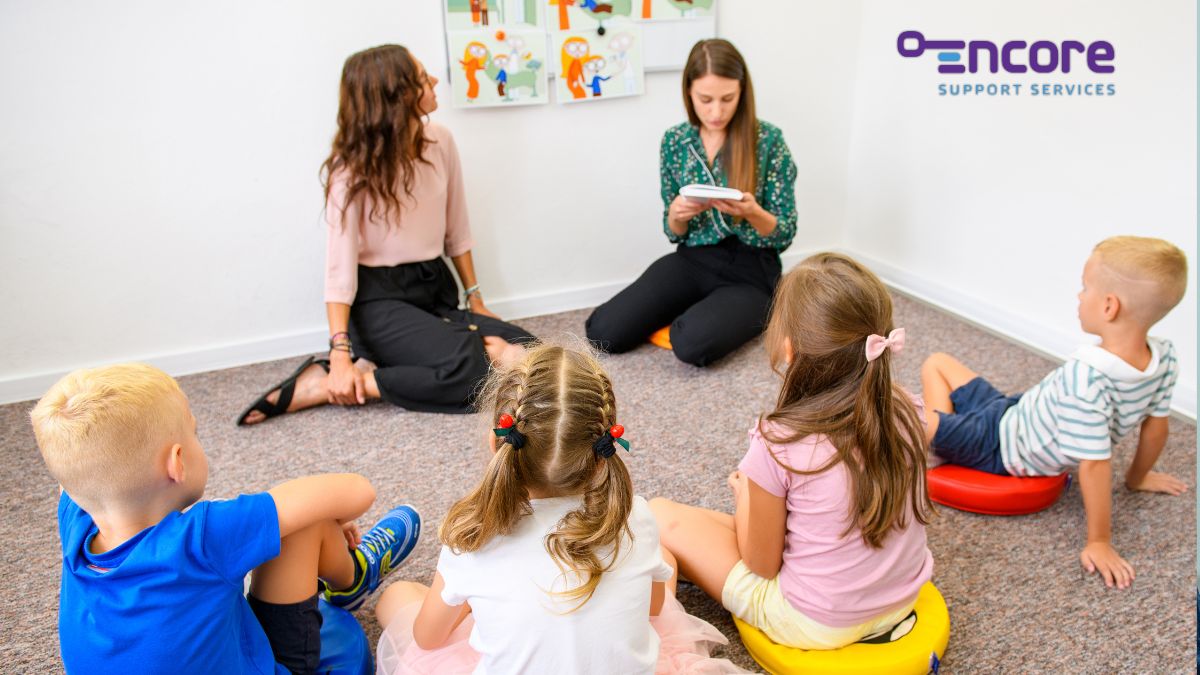
ABA group therapy brings children together in small groups, often with one or more therapists guiding activities. These sessions are less individualized but emphasize practicing real-world skills such as turn-taking, sharing, and communication.
Group therapy for autism is especially useful for preparing children to function in classrooms, playgrounds, or community settings. Instead of rehearsing skills in isolation, children practice them in social contexts where peer interaction plays a central role.
Benefits of ABA Group Therapy
- ⬩ Peer modeling: Children learn by watching others complete tasks and interact.
- ⬩ Social practice: Group sessions give children a safe space to practice making friends, managing conflict, and following group rules.
- ⬩ Confidence building: Repeated exposure to peers reduces anxiety in school and community environments.
- ⬩ School readiness: Many children transition more smoothly to classrooms after participating in an autism therapy group.
A 2018 analysis found that children in structured social skills groups showed measurable improvements in peer interactions, emotional recognition, and cooperative play compared to children who practiced these skills only in one-on-one settings. This reflects the benefits of learning with peers under guided instruction.
Comparing Group ABA Therapy vs. One on One ABA
Parents often wonder which is better: individual or group sessions. The truth is that both formats serve important purposes, and many children benefit from a combination.
| Aspect | One on One ABA Therapy | ABA Group Therapy |
| Focus | Skill-building, behavior reduction, communication | Social skills, teamwork, peer relationships |
| Setting | Flexible: home, school, or center | Center-based or community-based |
| Structure | Highly individualized | Moderately structured |
| Best for | Children who need intensive support or are starting therapy | Children preparing for school or peer-based environments |
A recent systematic review of ABA interventions reported that programs combining individual and group services were more effective at promoting long-term skill generalization than approaches relying on only one format.
ABA Therapy in Home vs. Center: Where Each Fits
When comparing ABA therapy in home vs. center, the location can influence whether group or individual therapy is more practical.
- ⬩ In-home sessions often focus on one on one ABA therapy, targeting daily routines like mealtime, hygiene, or bedtime. Parents can watch and participate, reinforcing strategies between sessions.
- ⬩ Center-based sessions often include both one on one ABA services and children group therapy. This setting provides a natural transition to classroom dynamics, where peers are always present.
Parents should consider whether their child learns best in a familiar home environment or benefits more from exposure to structured center-based routines.
When to Choose One on One ABA Therapy
One on one ABA therapy may be the better option when:
- ⬩ Your child is very young and just starting intervention.
- ⬩ They need intensive focus on language, behavior reduction, or daily living skills.
- ⬩ They become overwhelmed in group environments.
- ⬩ Progress requires close attention to detail and repeated practice.
This format is also recommended when specific goals, like toilet training or functional communication, require consistency and precision.
When to Choose ABA Group Therapy
Group therapy for autism may be the right choice when:
- ⬩ Your child already has basic communication and attention skills.
- ⬩ The main goals involve peer interaction, school readiness, or social-emotional learning.
- ⬩ You want your child to practice real-world situations in a safe, structured group.
- ⬩ Your child thrives on observing and imitating peers.
Children who struggle with making friends often benefit from autism therapy group sessions, since they create opportunities for safe practice before facing larger classrooms or playgrounds.
 Can Children Do Both?
Yes. In fact, many programs recommend starting with one on one ABA help, then gradually moving toward group sessions as skills improve. A blended model ensures children develop both the foundational skills and the social readiness needed for independence.
Therapists often create treatment plans where individual sessions focus on core goals while group sessions provide the chance to practice them. This balanced approach offers both depth and real-world application.
Frequently Asked Questions
Is ABA one-on-one?
Yes. ABA therapy is often one-on-one, particularly for focused programs targeting communication, behavior, or daily living. It can also run in small groups or family sessions for social goals. Comprehensive plans may reach 30–40 hours weekly, while focused one-on-one ABA commonly runs 10–25 hours.
How long should a child stay in ABA therapy?
A child should stay in ABA therapy as long as goals remain relevant and progress continues. Comprehensive ABA often runs 30–40 hours per week for about two years, with evidence linking higher intensity to greater skill gains. Teams review data regularly and adjust, taper, or end when goals are met.
At what age is ABA therapy most effective?
ABA therapy is most effective when started early, especially between 18 and 30 months. Trials of the Early Start Denver Model show gains in IQ and adaptive behavior at this age. The AAP recommends intensive intervention before age 3, though older children still benefit with tailored goals.
Find the Right ABA Therapy for Your Child
Every child’s journey with autism is different. Some children thrive with focused one on one ABA therapy, while others benefit from the social growth offered in ABA group therapy. For many families, a combination is the most effective path.
Families looking for professional guidance can explore autism therapy services in New York and New Jersey to find the right fit. At Encore ABA, therapists design programs that blend individual and group sessions to maximize progress. Our approach helps children gain daily living skills while building confidence in peer interactions.
Call us now to learn how therapy can support your child’s unique needs and prepare them for a brighter future.
Recent Questions
- Will my child ever be perceived as “normal”?
- How do I deal with an intensely emotional child, while juggling daily dut...
- How can I foster the development of early reading skills in my young childr...
- How can I help my child make friends?
- How do I make my home environment a happy, safe place for my child?
Encore Services
Special Ed
●
Behavior Modification DIR/Floortime
●
Social Skills & Social Thinking
●
Speech-Language Therapies
●
Multi-Sensory Math & Reading Instruction
●
Brain Gym & Physio-neurotherapy
●
Hebrew Reading Skill (Kriah) Training
●
Hands-On Music Therapy
●
Neuropsychological, Nutritional & Behavioral Evaluations
Encore ABA
●
Behavior Modification DIR/Floortime
●
Social Skills & Social Thinkin
g●
Speech-Language Therapies
●
Multi-Sensory Math & Reading Instruction
●
Brain Gym & Physio-neurotherapy
●
Hebrew Reading Skill (Kriah) Training
●
Hands-On Music Therapy
●
Neuropsychological, Nutritional & Behavioral Evaluations
